
TCDF Release Destinations
Torrance County Detention Facility is not a simple county-jail release point. Official inspections describe an over-72-hour immigration detention facility owned and operated by CoreCivic, with ICE Enforcement and Removal Operations oversight through the El Paso Field Office. Most public-facing records concern adult men in ICE custody. A person who leaves the building may enter the community under immigration conditions, move to another ICE site, be removed from the United States, or pass to another law-enforcement authority.
The recorded destination matters. “Transferred” means custody continued. “Released” in an ICE record can mean a conditional release with required check-ins, and it does not close the immigration case. Removal is also a departure from TCDF, but not release into Estancia. County or USMS populations housed at the same address follow different records systems. The custodian named on the booking document, A-number paperwork, or court case selects the right path.
Confirm a TCDF Release
For an ICE detainee, start with the ICE Online Detainee Locator System. ODLS includes current detainees and people released from ICE custody during the prior 60 days. It is an exact-match tool, not a full immigration-history file. Search with the nine-digit A-number and country of birth, or use exact first and last name, country of birth, and date of birth. Add leading zeros when an A-number has fewer than nine digits. People under 18 do not appear.
- Confirm that the record belongs to the same person by comparing the A-number, spelling, birth details, and custody paperwork.
- Read the status and location exactly. A new detention site indicates transfer, while a released result concerns ICE custody only.
- Record the search date because the post-release ODLS window is limited.
- Call ICE at 888-351-4024 when the status is unclear, the match disappears, or the release destination must be verified.
- Check release paperwork and immigration case information for reporting duties or later orders.
A no-result can reflect a spelling error, exact-match failure, protected record, age restriction, delayed data, or the end of the 60-day window. It is not proof of release. Eligible victims and witnesses may also use DHS-VINE for custody-change notice. DHS-VINE is separate from New Mexico VINE and is not the public locator.
Identity checks are especially important in immigration records. A hyphenated surname, the wrong country of birth, or an omitted leading zero in the A-number can defeat an exact search. Keep the person’s name as it appears on ICE paperwork and compare the result without publishing the full identifier. If the person moved from county or USMS custody into ICE, the date each agency took control helps explain why two systems show different events.
For a county detainee, use the county booking and release record plus the state court case. For a USMS detainee, use the federal docket and clerk. The broader Torrance County released-inmate search explains how to identify the right custodian when the path is uncertain.
Note: Preserve the locator result, retrieval date, and release paperwork because each source answers a different part of the custody question.
TCDF Release Contacts
The facility can address local placement and logistics questions, while ICE controls an immigration detainee’s legal custody status. CoreCivic’s page directs ICE questions to the federal information line. No official source gives a release-processing hour, exit door, family waiting point, transport plan, or property-return schedule. Call before traveling and ask only for the procedures that apply to the named custody population.
Torrance County Detention Facility
209 County Road A049
Estancia, NM 87016
Phone: 505-384-2711
Fax: 505-384-5184
ICE Detention Reporting and Information Line: 888-351-4024
The facility phone is a logistics contact, not a substitute for an ICE release record. Ask which agency is responsible for the person and where record questions must go. For a county booking, the Torrance County IPRA custodian may hold the release sheet. For a federal pretrial case, the filed court order is the enduring source.
TCDF ICE Release Records
ODLS is the strongest public status route during its limited window, but it does not provide a full release packet. ICE release paperwork can state conditions and ERO check-in duties. The ICE check-in guidance explains that an officer gives reporting instructions and that paperwork may not contain every appointment detail. A check-in is community supervision, not jail custody, and it is distinct from an immigration-court hearing.
When a historic record is needed after the public window closes, an ICE records request may be appropriate. Privacy rules can require proof of identity or authorization. State corrections is not the primary fallback. NMCD has no authority over ICE detention, and an ICE exit does not create an NMCD record unless a separate New Mexico sentence or supervision case exists.
Immigration court information answers another part of the story. A hearing or case status does not establish current detention, while an ODLS result does not decide the pending immigration case. ERO check-in instructions can remain in effect after physical release. Read each source for its own purpose, then use the most recent agency paperwork when dates or reporting duties conflict.
- Conditional release
- Physical release with immigration reporting or other terms still in force.
- Transfer
- Movement to another custodian or detention site, with custody continuing.
- Removal
- Departure from the United States under immigration authority, not community release in Torrance County.
- Detainer
- A request or legal hold that may affect whether another agency releases or transfers the person.
View TCDF Custody Sources
The ICE detention-facility directory supplies the official federal directory context for the Estancia site.
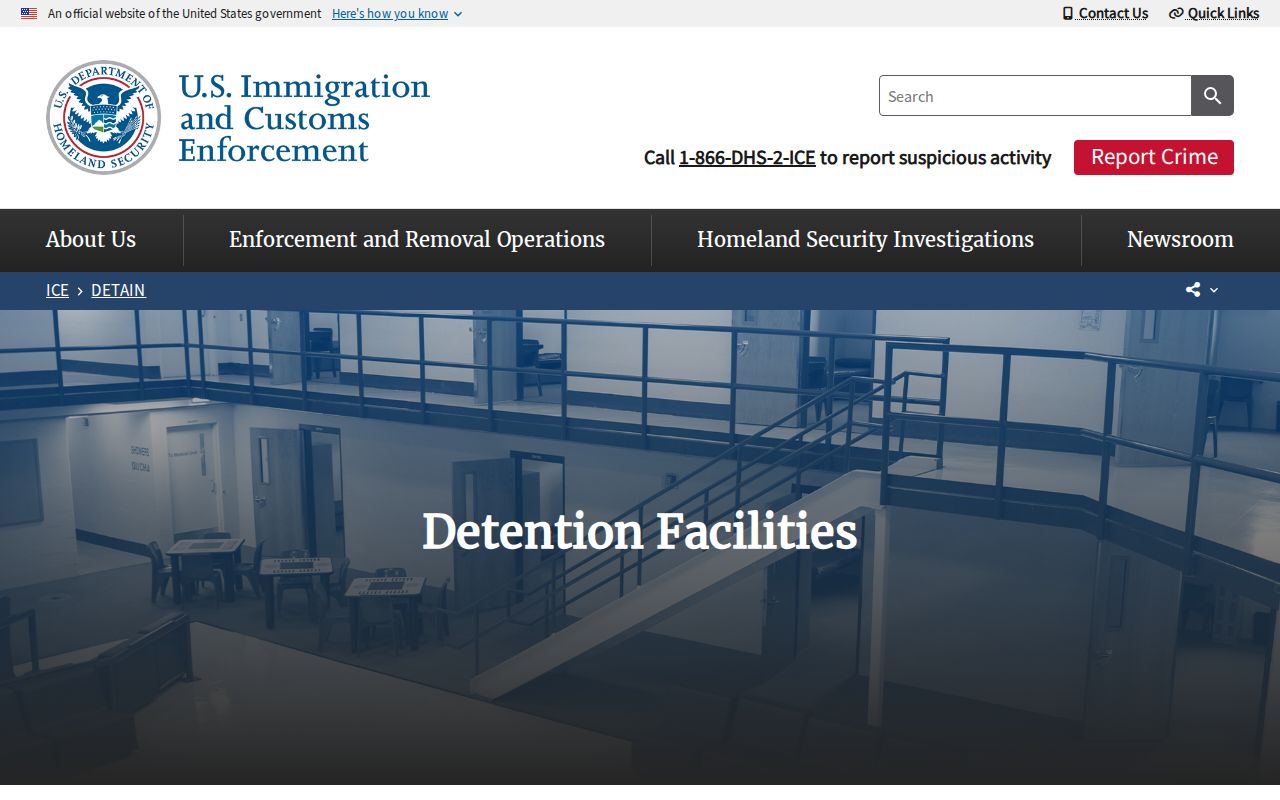
The directory identifies the detention system, but a person-specific release still requires ODLS, ICE confirmation, or the person’s paperwork.
TCDF Release History Context
Official ICE inspection history says the Estancia facility opened in 1990. ICE ERO began holding detainees there in 2019 under the El Paso Field Office. That timeline explains why an older news story, booking record, or web page may describe the building as a county or private jail, while current federal material highlights immigration detention. The name stayed similar as the dominant public custody role changed.
Use the agency and date on the individual record. Do not apply current ICE facts to a person housed there before the ICE arrangement began, and do not treat an old county-jail reference as proof that a current detainee belongs in a Sheriff roster. CoreCivic material also separates ICE, Torrance County, and USMS populations. One building can therefore produce three different release trails.
Note: Facility history explains older labels, but only the custodian identified for the specific detention episode controls the release record.
When TCDF Detainees Leave
The key local distinction is the one documented in Research Section 19: TCDF is an ICE and CoreCivic over-72-hour site, not merely a conventional Sheriff jail. ICE’s 60-day released-person window gives Torrance County a concrete federal search route that many county-jail systems do not have. Still, the result must be read narrowly. It reports ICE custody, not every possible state, federal, or local hold.
A released ODLS entry is useful evidence when it matches the person. Pair it with release papers or ERO confirmation. If the result instead names another facility, custody continued. If there is no result, check exact identity data and the timing of the search before drawing any conclusion. This approach keeps transfer, removal, and conditional release from being collapsed into a single claim.
For a non-ICE population, ask CoreCivic which customer held the record rather than assuming that the facility can issue the legal release proof. County records may route through Torrance County, and USMS status belongs with the federal court pathway. The correct record should state the releasing authority and, when maintained and public, the receiving agency. That text is more reliable than an account of where the person was last seen.
CoreCivic’s public materials do not establish a release hour, weekend procedure, exit door, family waiting place, transportation plan, or property-return process for TCDF. Call 505-384-2711 for current logistics, but keep that practical inquiry separate from legal status. A staff answer about departure arrangements cannot replace an ICE release record, a transfer entry, or a removal document. If release papers impose ERO reporting, use the instructions on those papers and the official ICE check-in guidance. A required check-in is not continued jail custody, yet it shows that leaving TCDF may carry ongoing immigration obligations.
When dates differ, ask each custodian what event its date represents and avoid merging intake, transfer, departure, and legal release into one timestamp.